


From 6 to 8 February 2026, at the tourism exhibition – fair “Balttour”, visitors had the opportunity not only to discover new destinations, but also to experience something far more personal — to understand what it means to move around, perceive information and navigate the environment with mobility, visual or hearing impairments.
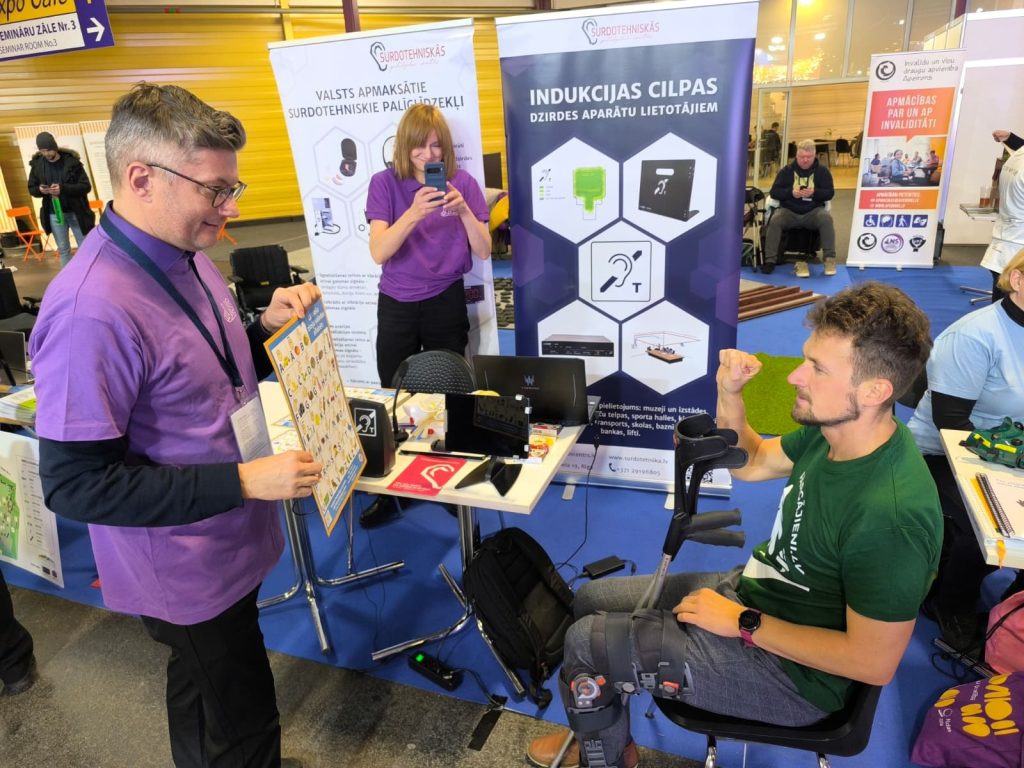
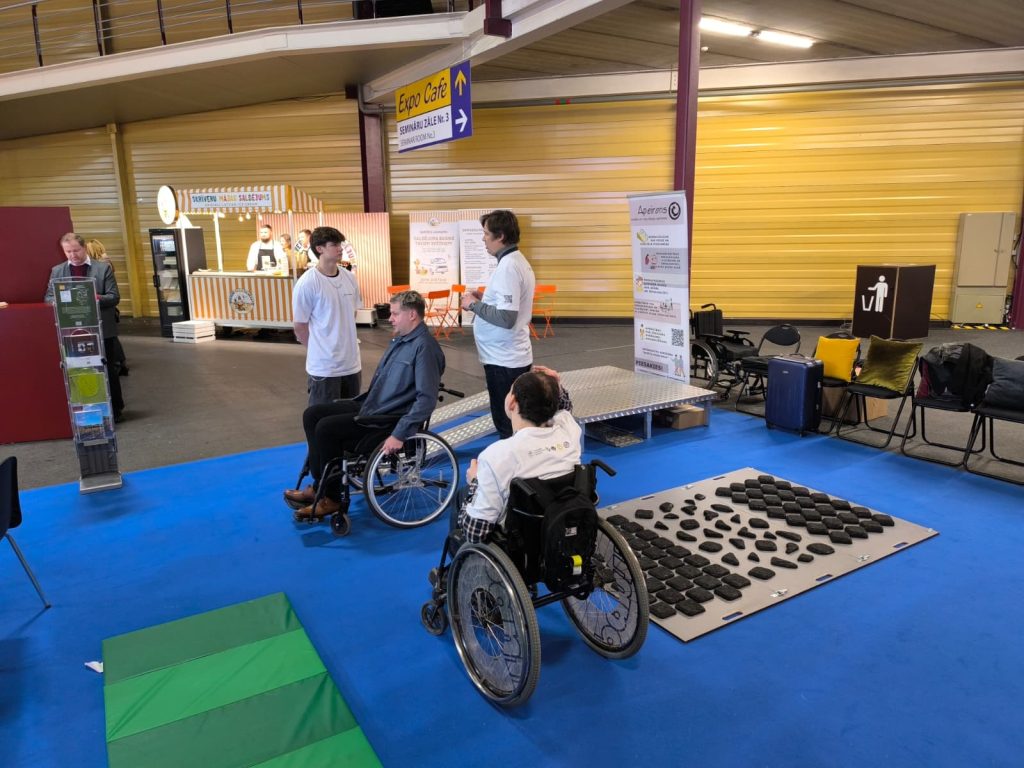
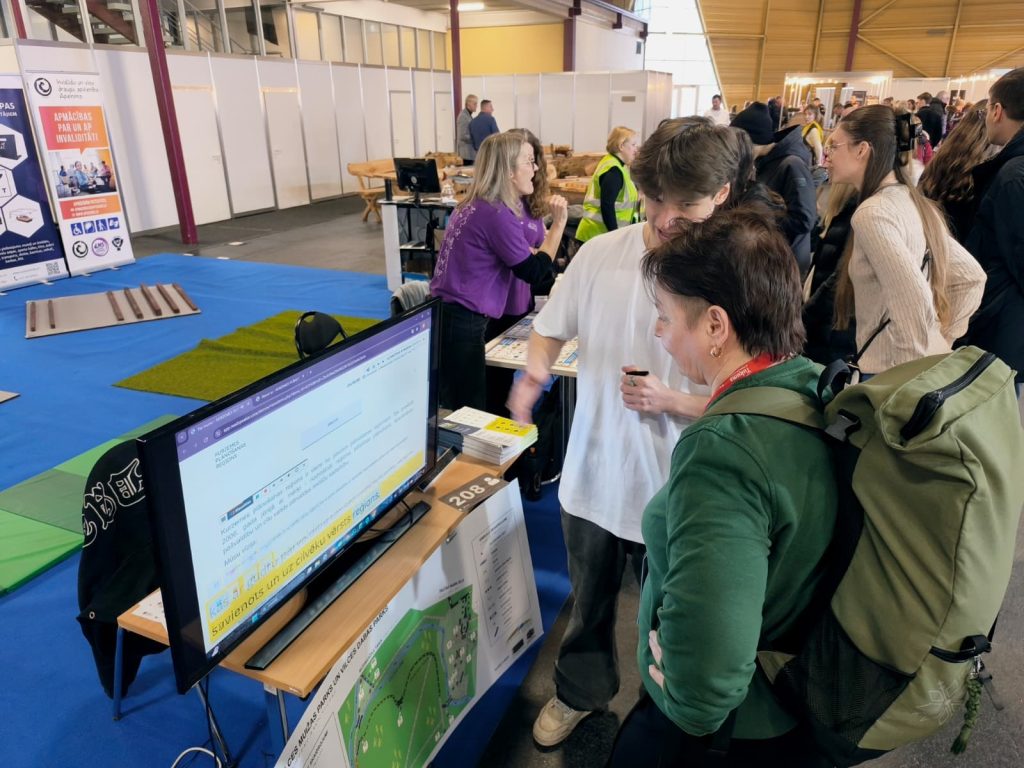
Visitors were offered to experience the Sensory Path — an interactive activities’ zone that invited visitors to explore accessibility in practice.
What could be experienced on the Sensory Path?
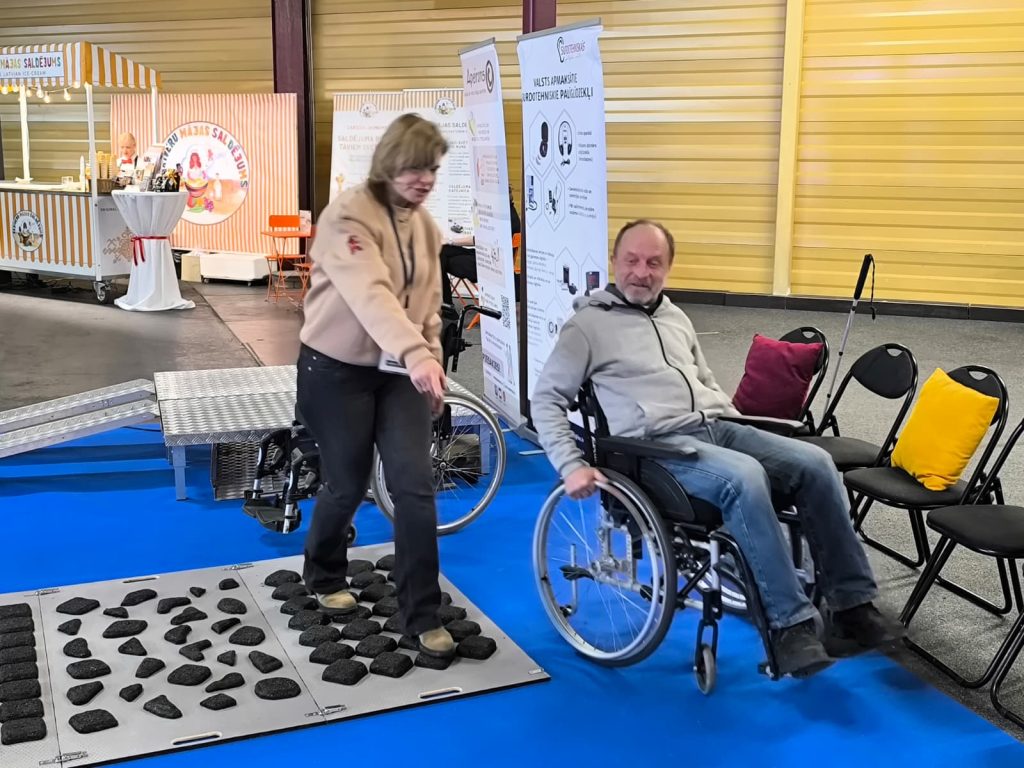
The Sensory Path featured activity tables and specially designed tracks with different surface types, e.g. imitating old-town bricks, grass, thresholds, roots etc., allowing everyone to practically try situations that people with functional impairments face in their daily lives.
Moving in a wheelchair became one of the most emotionally powerful experiences. Some visitors initially felt hesitant about the invitation to sit in a wheelchair themselves, yet many brave participants consciously chose to take on the challenge in order to better understand the obstacles that wheelchair users encounter in everyday life and while travelling. This experience often became a starting point for conversations about accessibility, attitudes and improvements to the environment.
The Sensory Path once again demonstrated that accessibility is not only about infrastructure, but also about attitude, the format of information and willingness to adapt.
Professionals, organisations and real-life experience
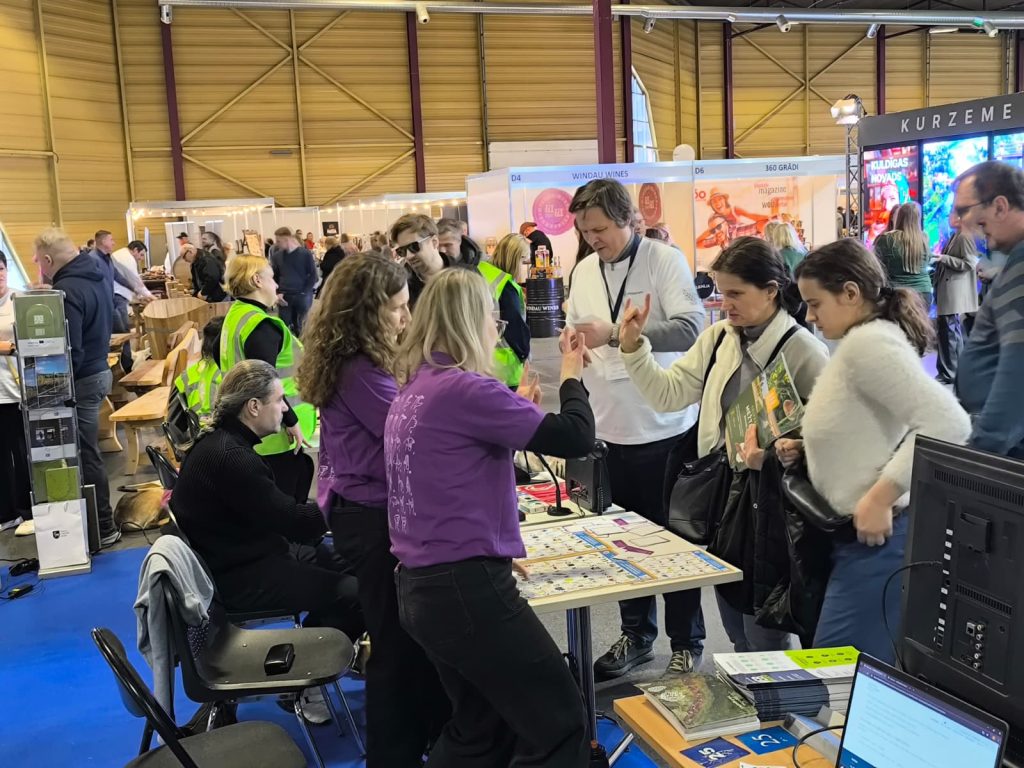
The Sensory Path brought together professionals and non-governmental organisations working in the field, giving visitors the opportunity to meet them in person, ask questions and receive practical advice.
Association of Disabled People and Their Friends “Apeirons”
Public relations specialist Reinis Darkēvics and digital accessibility expert Gatis Preiss introduced issues related to environmental and digital accessibility. Demonstrations showed how websites can be made usable for people with visual impairments, as well as various Latvian-speaking assistive devices.
More: www.apeirons.lv
Gatis Grīntāls, Exceed
The first company in Latvia specialising in typhlotechnology demonstrated technologies that enable websites to read content aloud, highlight the text being read, scroll content and even read PDF files.
More: www.exceed.lv
Latvian Association of the Deaf
Visitors learned about assistive hearing technologies, communication solutions and even how to show their own name in sign language.
More: www.lns.lv
Service Dog Association “Teodors”
On the second day of the exhibition, three service dogs visited the Sensory Path. Visitors learned about different types of visual impairments and how service dogs assist people in everyday life.
More: www.teodors.org
Riga Association of People with Low Vision and Blindness “Redzi mani”
The organisation shared experience related to visual accessibility issues.
More: redzimani.mozello.lv
Kurzeme Planning Region
Project managers Alise Lūse, Aija Neilande and Project coordinator Inga Hartika introduced the website mapeirons.eu and accessibility-focused projects implemented in the region in the field of tourism and cultural heritage.
More: www.kurzemesregions.lv
A sensory experience through culture
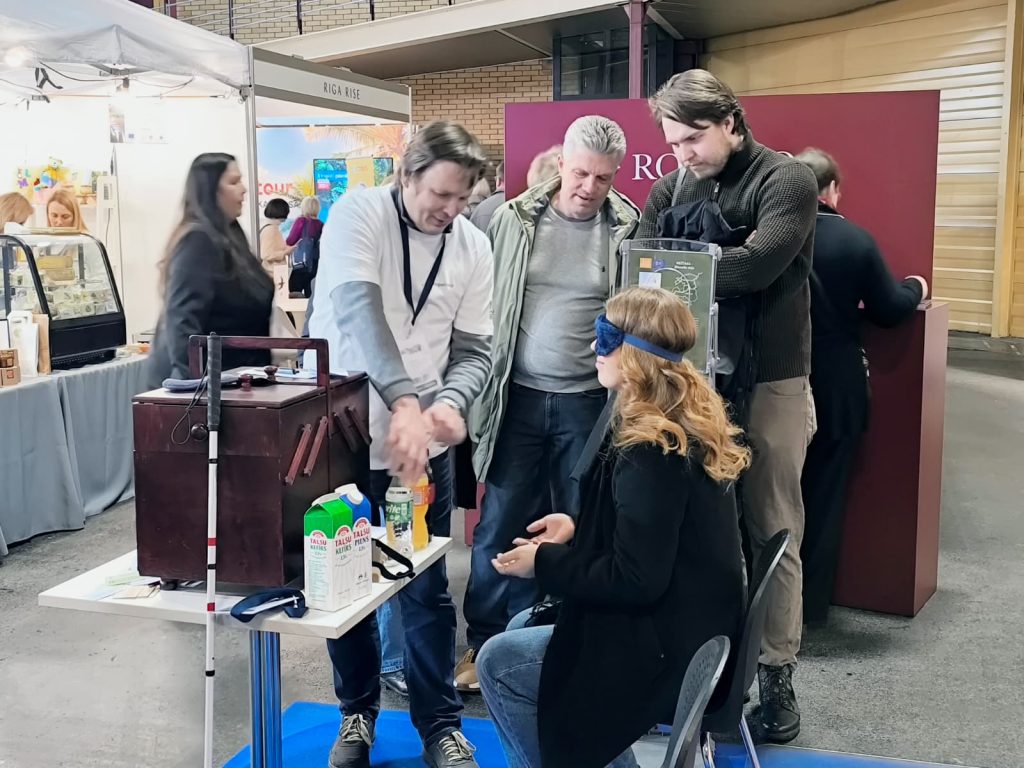
Visitors could also explore one of six travelling museum boxes from Kurzeme. The box from the Ventspils Seaside Open-Air Museum contained tactile grains, fish, different types of anchors, fishing nets, knots, tactile cards and even an old map of Kurzeme — everything could be touched and tried out.
At the end of each exhibition day, a lottery was held with a sweet prize from “Skrīveru Saldumi”t o pick one winner of the day from those who participated in the Sensory Path challenge. Over the three exhibition days a total of almost 100 visitors took par tin the Sensory Path challenge.
Participation in the exhibition was supported by the project “Development of Accessible Tourism Routes (Access Routes)” (EE-LV00043), implemented with financial support from the Interreg Estonia–Latvia Programme 2021–2027, providing regions with knowledge, tools and practical examples for creating an inclusive environment in tourism and cultural heritage.
Project activities are implemented with support from the Interreg Estonia–Latvia Programme 2021–2027.
Information prepared by:
Inga Hartika
Project Coordinator in Tourism and Marketing
Email: inga.hartika@kurzemesregions.lv