


Training for nature guides took place in the Abava River Valley within the framework of the project “Enhancing protection and conservation of geological structures in Latvia and Lithuania” (Geosites, No. LL-00244). The training brought together nature guides operating in the Kurzeme region, as well as other professionals working in nature tourism and interpretation.
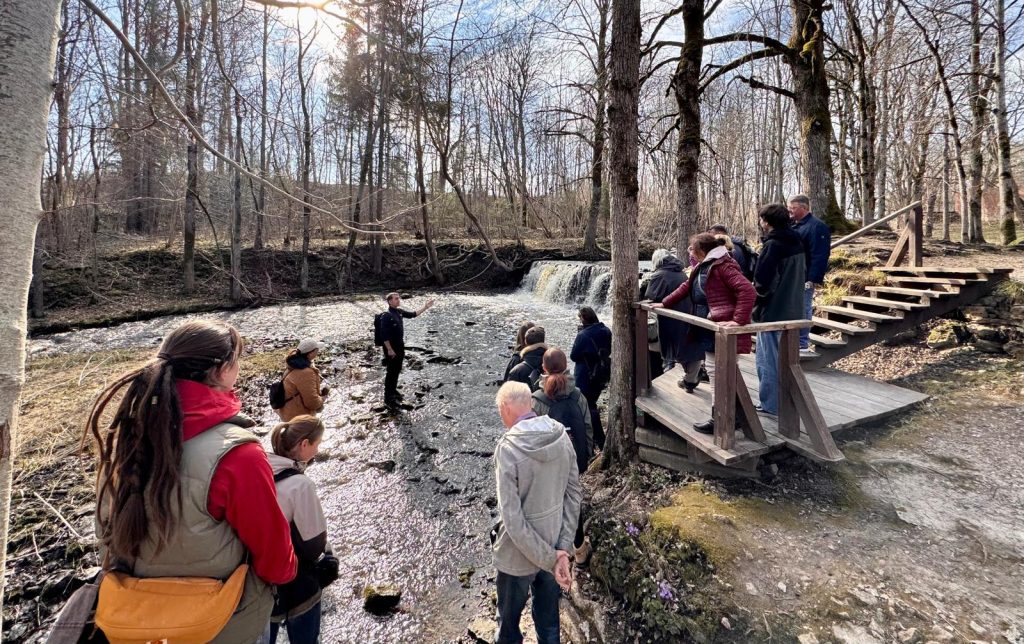
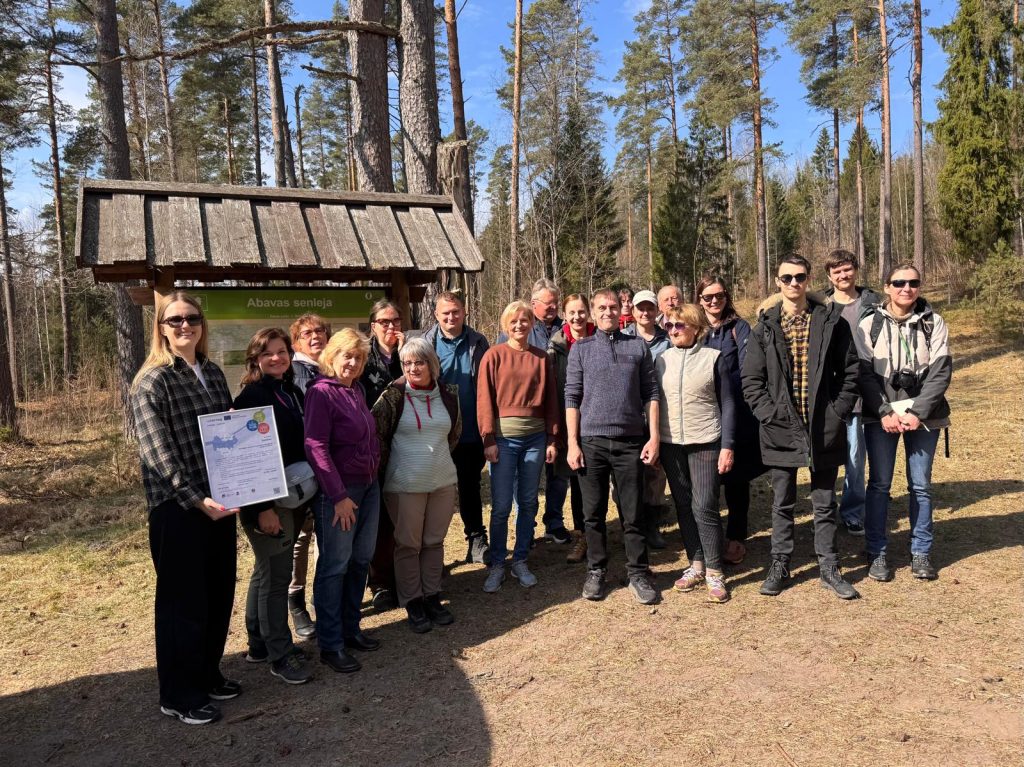
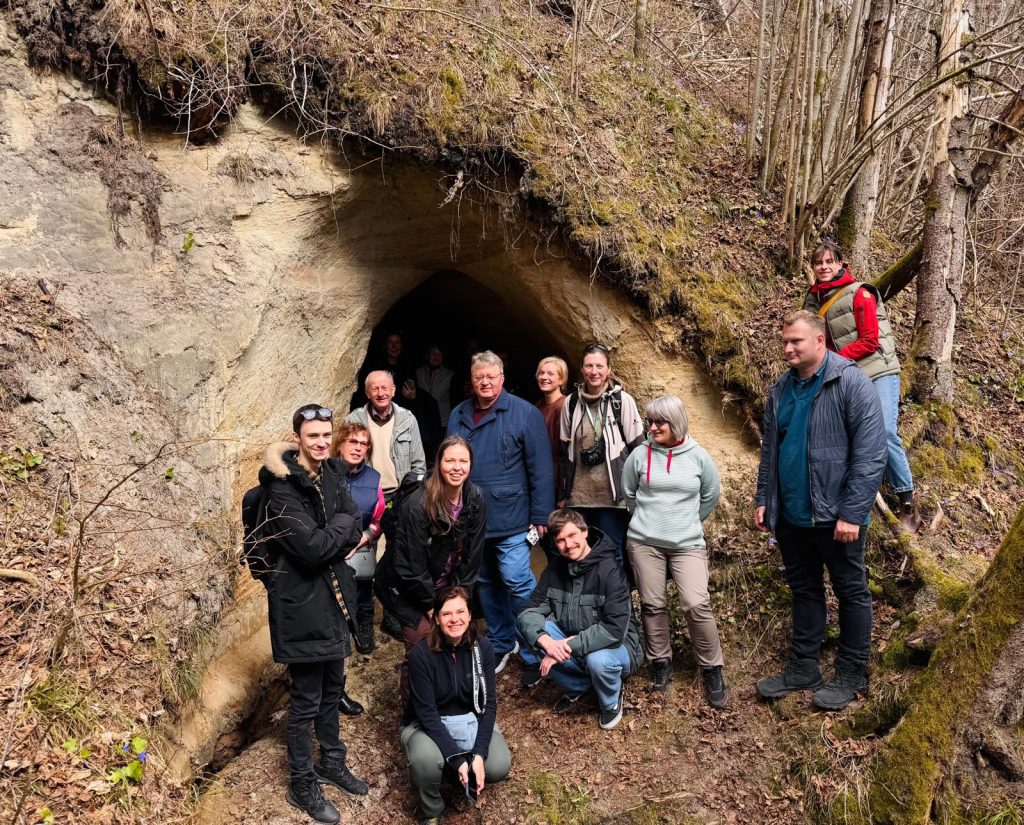
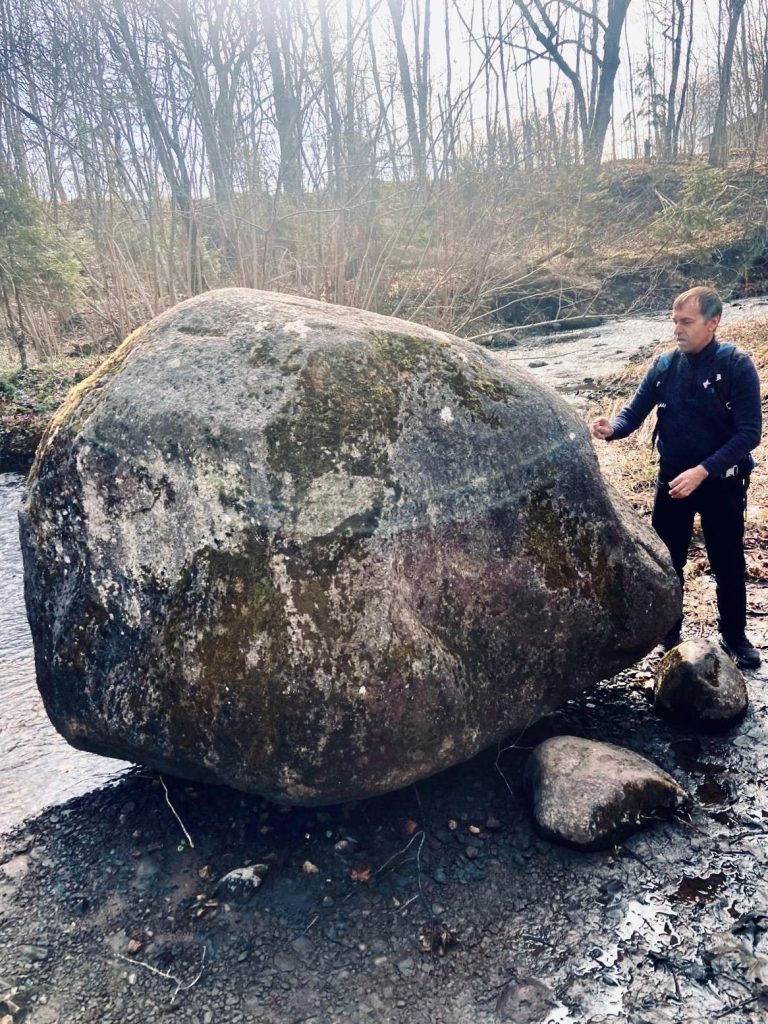
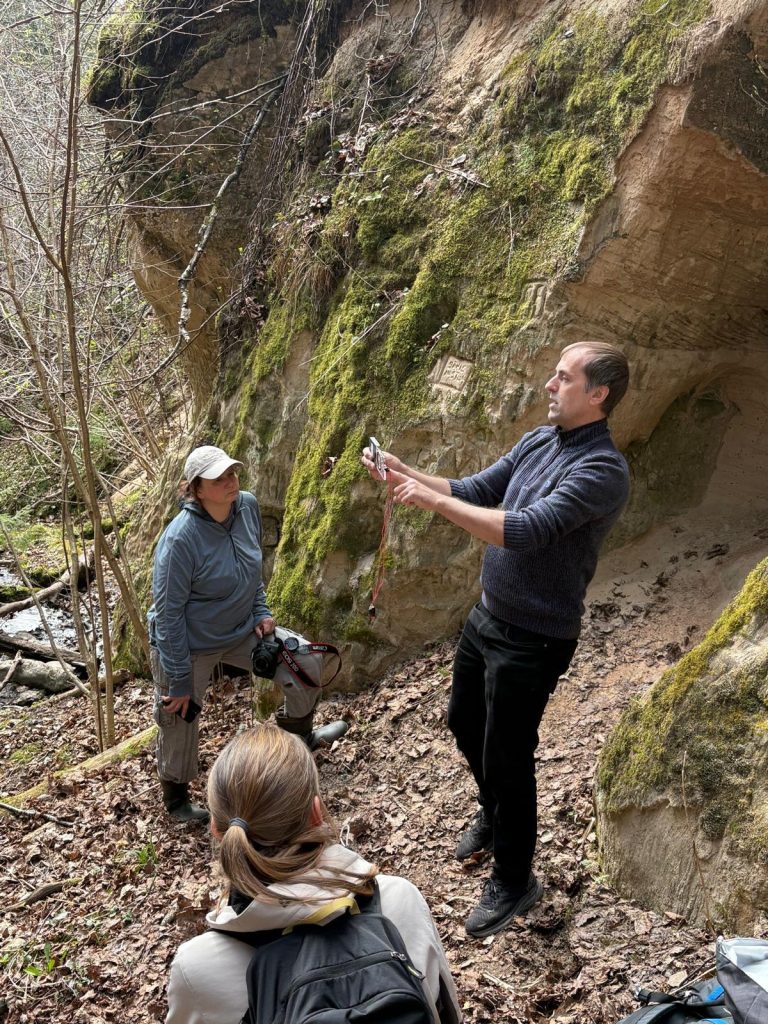
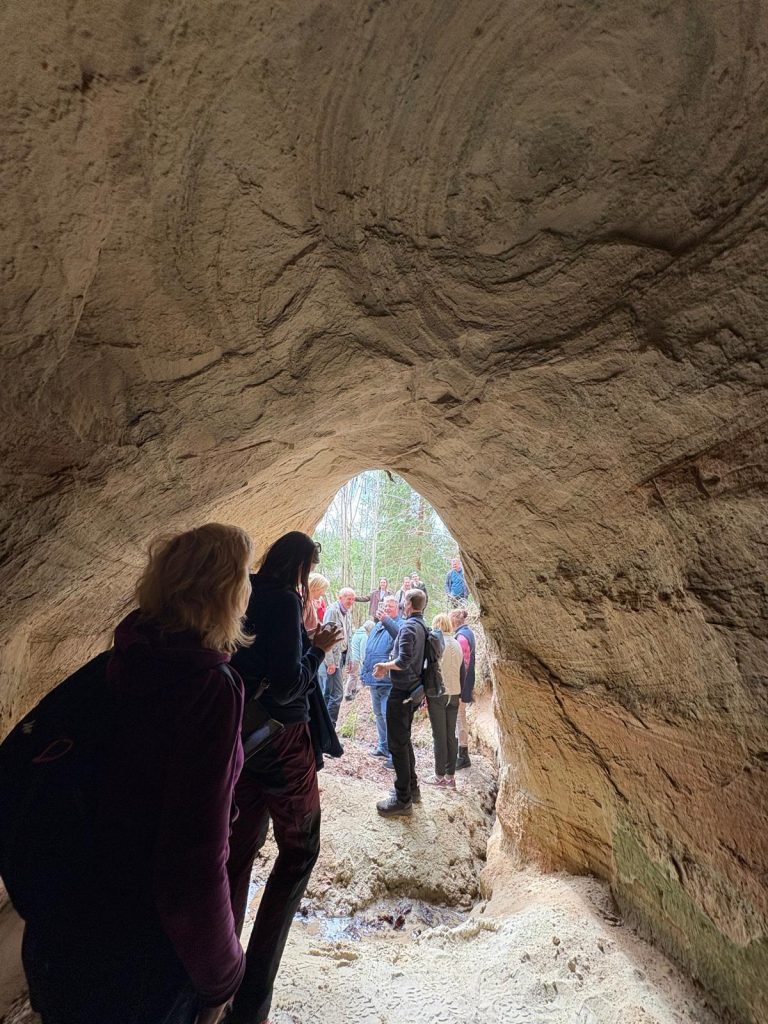
The aim of the training was to strengthen participants’ understanding of the geological heritage of the Abava River Valley and to provide practical knowledge on how to interpret it for different audiences during guided tours. Particular attention was given to the formation processes of Devonian rocks – sandstone and dolomite – as well as the development of landforms and their interconnections.
During the practical part of the training, participants visited several significant geological sites in the Abava Valley, including the Īvande Waterfalls, the Great Stelbu Spring, Māra’s Chambers, and the Abava Rapid. At each location, specific geological processes were explored in the field, such as the formation of waterfalls in dolomite, the development of caves and niches in sandstone, and the formation of springs and the precipitation of iron compounds.
Participants gained deeper insight into the formation of calcite and dolomite inclusions in Devonian sandstones, as well as indicators that help identify the conditions under which these rocks were formed. The training also highlighted the practical importance of this knowledge – how to explain complex geological processes in a clear, engaging, and accessible way to visitors.
The training was led by Assoc. Prof. Ģirts Stinkulis from the Department of Geology at the University of Latvia. Under his guidance, participants not only acquired theoretical knowledge but also engaged in discussions and exchanged practical experience in nature interpretation.
The participants represented a wide range of institutions and organisations, including municipalities, nature conservation bodies, tourism enterprises, and individual service providers. The knowledge gained during the training will be applied in guiding tours, organising nature hikes, delivering educational activities, and developing new nature tourism products and routes in the Kurzeme region.
This was the first of three planned training sessions within the Geosites project, each focusing on different aspects of natural heritage in the region.
The GEOSITES project is co-financed by the Interreg Latvia–Lithuania Cross-border Cooperation Programme 2021–2027 and represents a strategic effort to strengthen cross-border collaboration in geological heritage conservation. The Lead Partner is the Latvian Institute of Aquatic Ecology, with project partners the Kurzeme Planning Region and the Žemaitija National Park Directorate (ŽNPD).
For more Information:
Anna Elizabete Upsava
Phone: +371 26369876
E-mail: anna.upsava@kurzemesregions.lv