

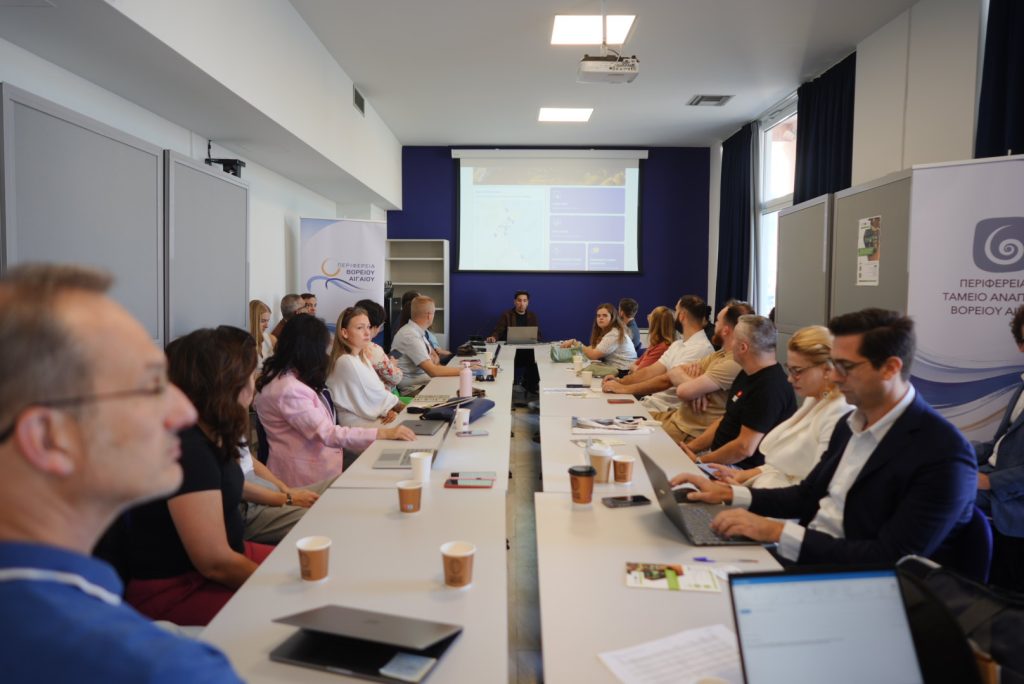
The IN MOBILITY project partners met in Mytilene, on the island of Lesvos, Greece, on 23–24 September 2026 for the third Peer Review and a Study Visit dedicated to social inclusion and the mobility of vulnerable groups.
The meeting brought together partners and invited stakeholders representing eight different national contexts across Europe: Italy, Greece, Poland, Romania, Belgium, the Netherlands, Latvia and Ukraine. The diversity of territories represented – from cities and metropolitan areas to regions, peripheral and island contexts – provided a valuable basis for comparing how mobility-related vulnerability takes different forms across Europe.
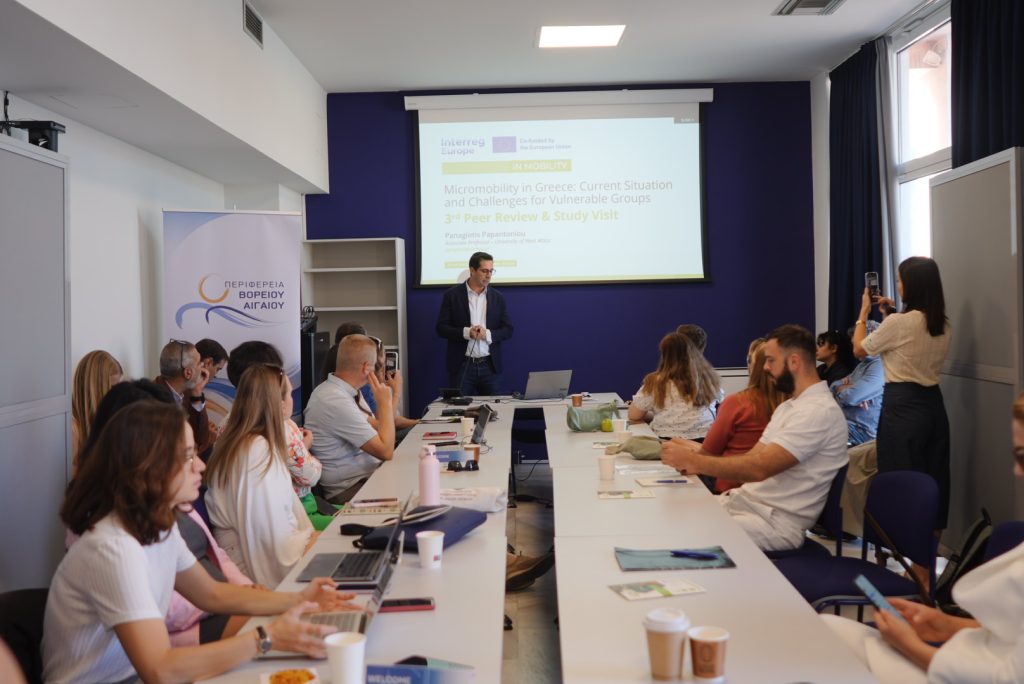
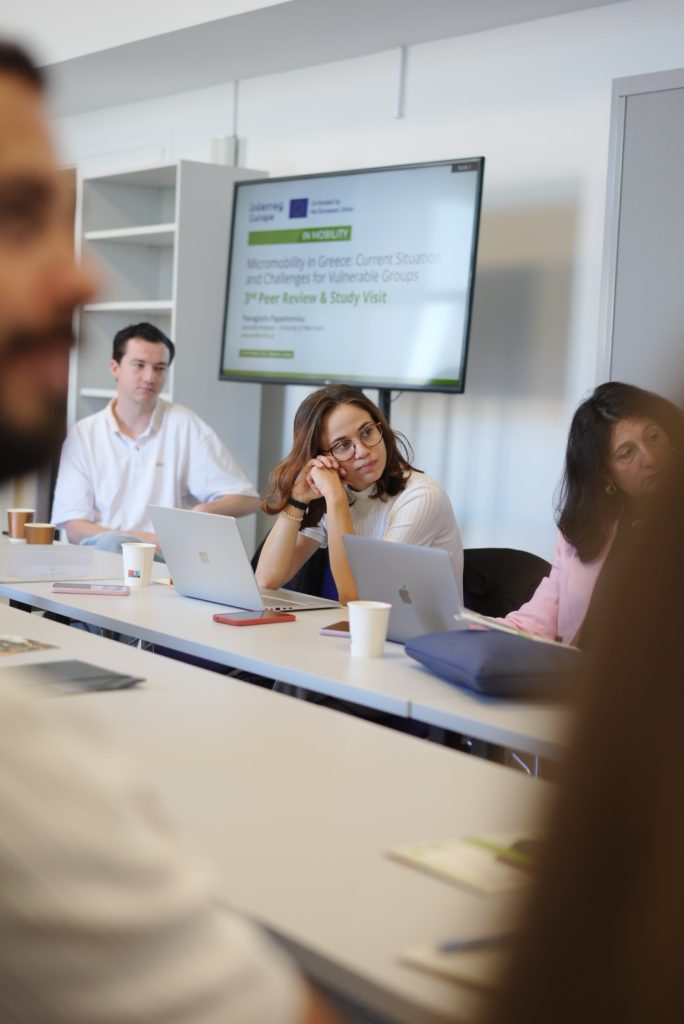
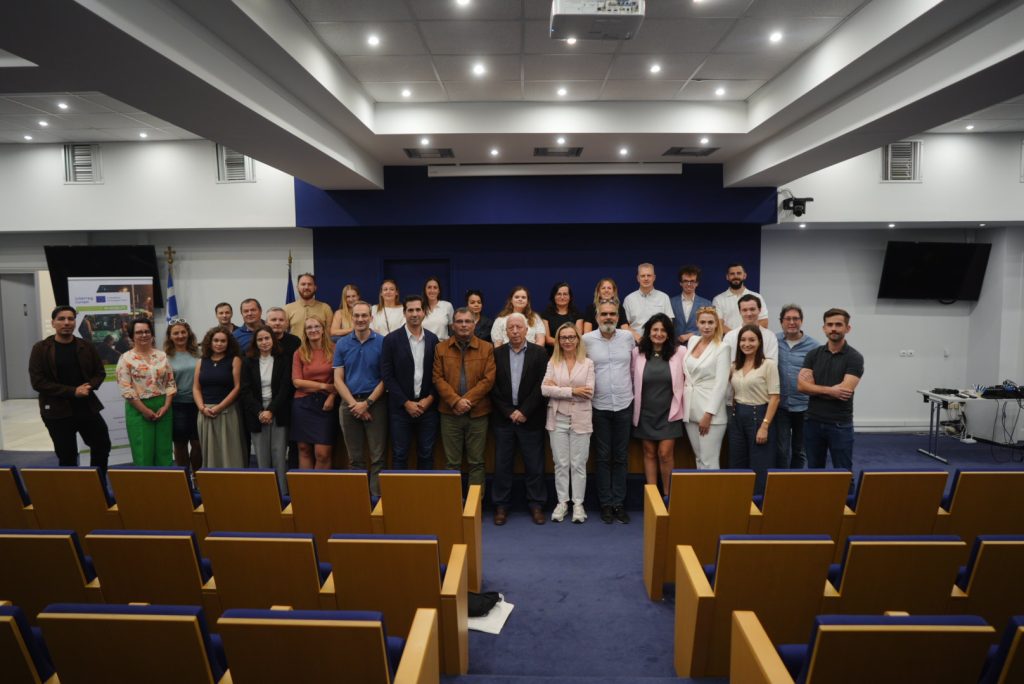
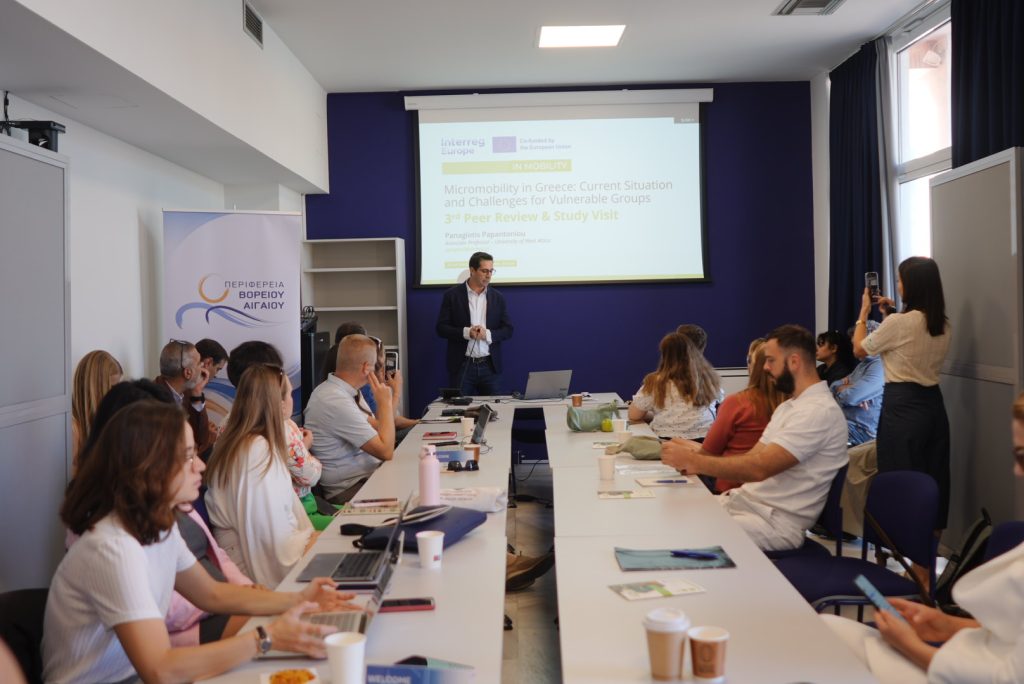
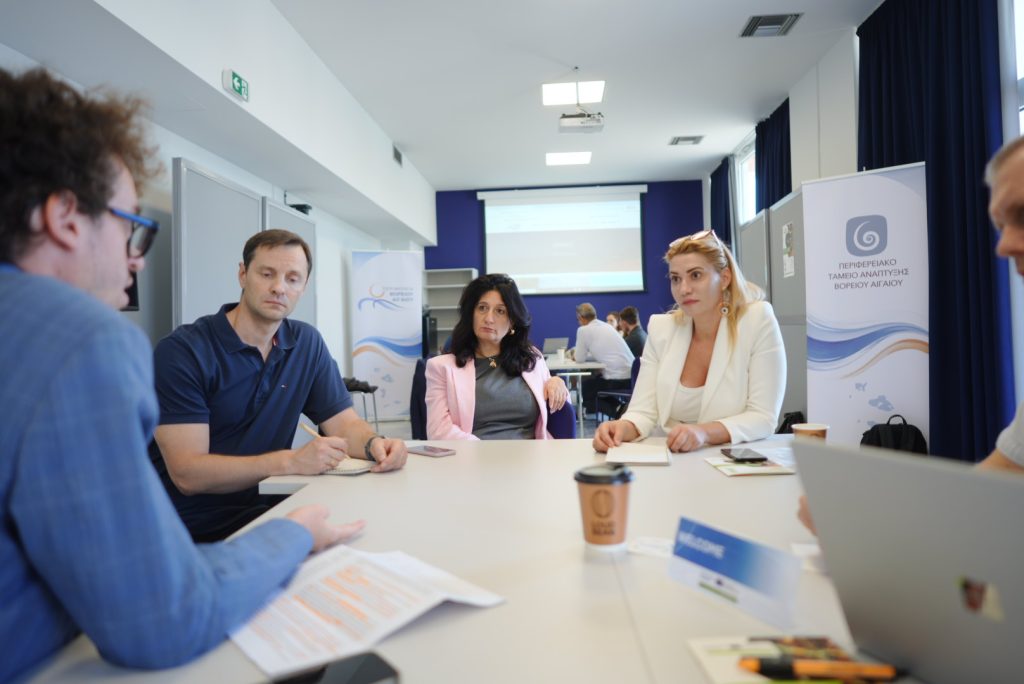
The meeting highlighted practical solutions through which public transport and mobility services can become more accessible for older people, persons with disabilities and other groups facing difficulties in their daily mobility.
Day 1 – Inclusive mobility and solutions for vulnerable groups
The first day of the meeting, 23 September, was dedicated to the third Peer Review, with a central focus on social exclusion and the mobility of vulnerable groups.
The programme featured several European examples of services adapted to people who face difficulties in using conventional transport systems. These included chartered taxi services for persons with disabilities and older people in Chios and Mytilene, experiences related to inclusive mobility for persons with disabilities in Bruges, measures to reduce mobility barriers through public transport in the Kurzeme region, and the Dial-a-Ride service in Kragujevac, designed for persons with disabilities.
One of the key activities of the day was the Good Practices Speed Date session, designed to move beyond the simple exchange of information and towards identifying solutions that can effectively contribute to improving local policies. Each partner analysed the practices presented by the other regions in relation to their own policy instrument and the improvements they aim to achieve within the project.
The discussions focused on highly practical aspects: how a specific measure works, what resources it requires, what difficulties emerged during implementation, and under what conditions it could be transferred to another city or region. This approach allows partners to identify not only interesting examples, but relevant and applicable solutions for their own communities.
The first day also included the presentation of a local practice from the Mytilene area involving urban commuting by small vessels, “The Gazolina”, an example illustrating how geographical characteristics and local traditions can be integrated into mobility solutions.
Day 2 – From good practices to solutions applicable in local policies
The second day, 24 September, continued with a Study Visit and interactive sessions dedicated to practical mobility solutions.
Participants explored the bike-sharing scheme in Mytilene, the current state of micromobility in Greece, and the challenges such services may pose for vulnerable groups. Another example presented was free public transport for older people, implemented locally.
An important component of the day was the Experts Tables sessions. Experts selected from among the project partners and qualified stakeholders from the participating territories contributed their specific knowledge, experience and perspectives to the discussion. Their inputs provided valuable insights into existing challenges, opportunities for improvement and potential solutions, fostering peer learning and the exchange of practices across different territorial contexts. The discussions were specifically aimed at generating practical recommendations to improve the effectiveness of relevant policy instruments and to support the transfer of lessons learned into regional and local policy-making.
The thematic areas addressed were:
- transport for vulnerable groups;
- participation and research;
- identifying and mapping transport poverty in cities;
- demand-responsive public transport.
The format enabled participants to compare and test their own ideas and solutions against the experiences of international experts and other European partners. The discussions addressed real challenges and concrete policy options, helping each participant identify elements that could later be adapted to their own local context.
Focus on flexible, accessible and needs-based transport
The conclusions of the discussions in Mytilene showed particularly strong interest among partners in demand-responsive and flexible transport, mobility solutions for vulnerable groups, accessible public transport and socially inclusive mobility measures.
Among the practices that attracted the greatest interest were the taxi voucher scheme for vulnerable groups in Bruges, voluntary transport services in Amsterdam, demand-responsive transport in rural areas of the Kurzeme region, and the Dial-a-Ride service in Kragujevac.
These examples address a challenge shared by many European cities and regions: people who, because of age, disability, income, location or limited access to public transport, face difficulties in reaching workplaces, healthcare services, education or other essential activities.
From exchange of experience to policy improvement
The meeting in Mytilene also marks the transition of the IN MOBILITY project into a phase in which the experience gained through European cooperation should increasingly translate into concrete improvements to the partners’ policy instruments.
During the Project Management Group meeting, particular emphasis was placed on the need to establish a clear link between what partners learn from the experience of other regions, the adaptation of these solutions to local realities, and the concrete changes that can be introduced into mobility policies and strategies.
Through this approach, IN MOBILITY aims to ensure that the exchange of experience among European regions leads to solutions that are better adapted to citizens’ real needs and to mobility systems that are more accessible, flexible and inclusive.
Learn more: www.interregeurope.eu/in-mobility
Project IIN MOBILITY is implemented within the frame of INTERREG EUROPE Programme, co-funded by the European Regional Development Fund (ERDF)
