

On 6 May 2026, Baltic PlaNet brought together Latvian stakeholders – residents, local authorities, planning regions, the Ministry of Smart Administration and Regional Development, community organisations and researchers – in Jūrmala, Latvia, for the workshop Our Coast, Our Future: A Community Conversation About Flooding and What Comes Next.
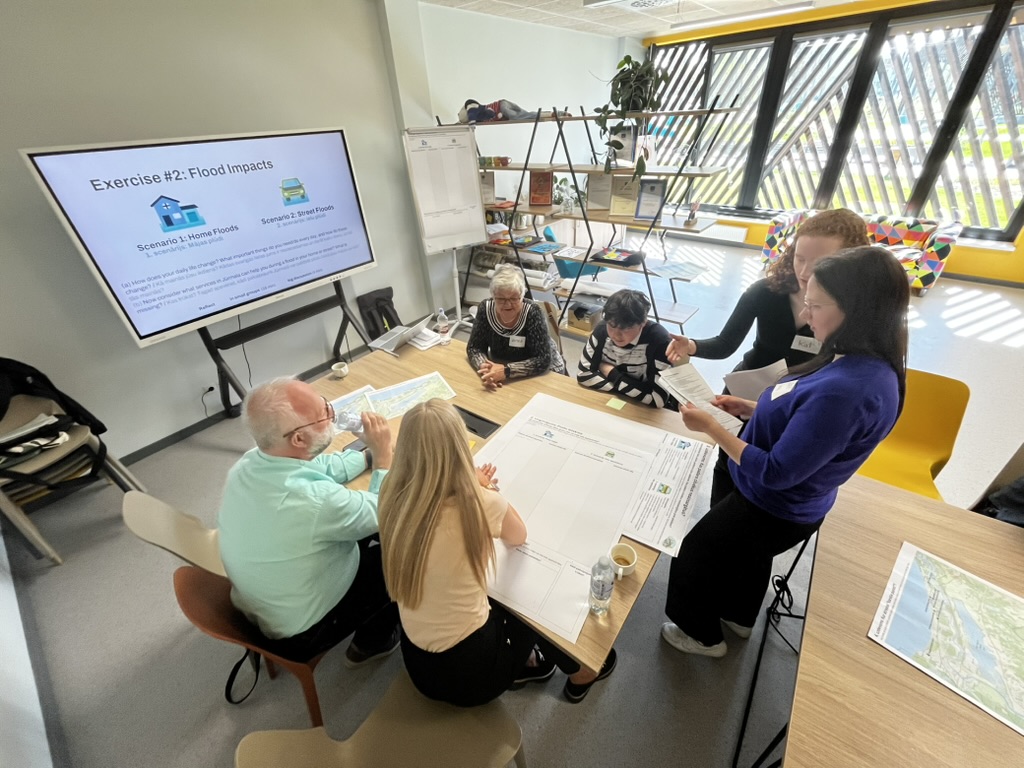
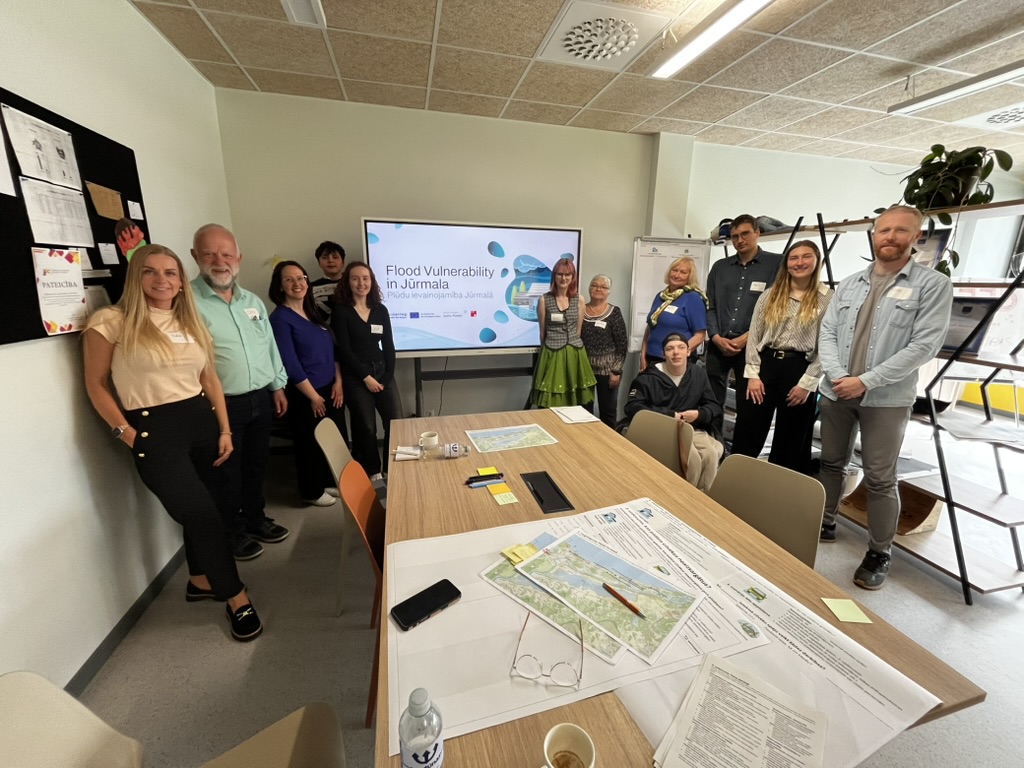
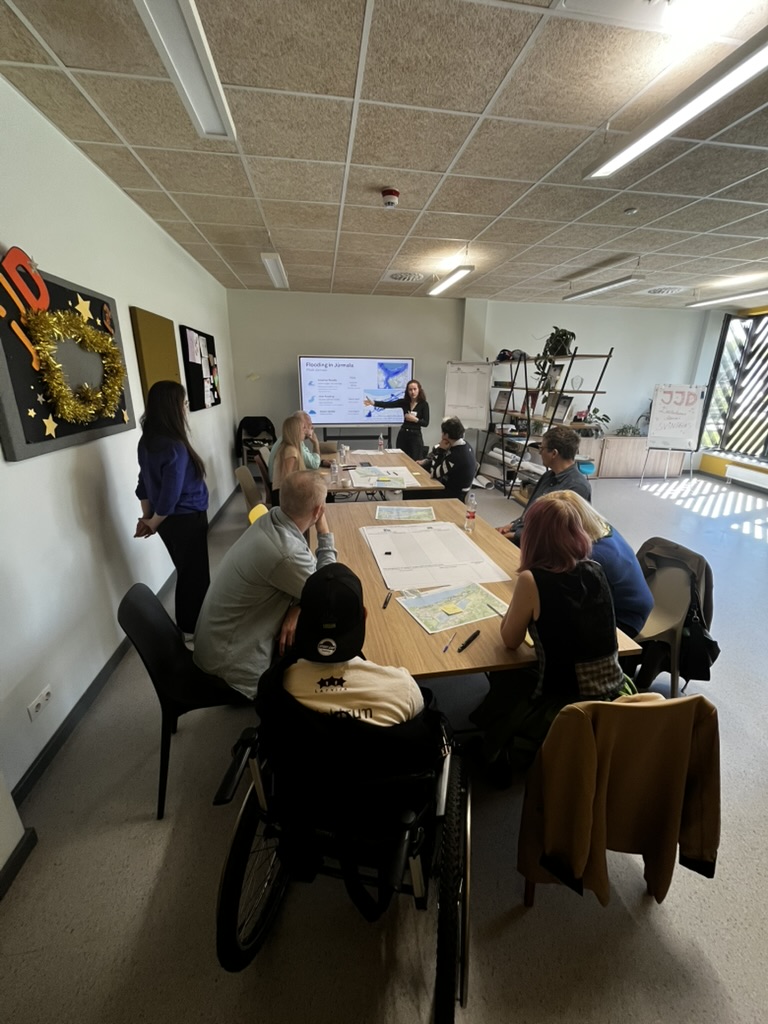
Facing increasing flood risks from the river, sea and extreme rainfall, participants reflected on lessons from the severe 2024 floods in Jūrmala to identify vulnerable groups, understand community impacts and co-develop indicators for mapping social vulnerability and flood risk.
The workshop was organised in two parallel sessions, engaging public authorities and local communities separately. Discussions with institutional stakeholders focused on key challenges in coastal planning, including coordination between different levels of governance, the division of responsibilities and administrative barriers to effective coastal management.
Meanwhile, local residents shared their experiences of flooding, identified areas and groups particularly at risk, and explored how community knowledge could contribute to more accurate risk assessments and better preparedness.
The discussions highlighted several priorities for strengthening climate resilience in coastal areas:
- Integrating reliable climate data and information into spatial planning;
- Strengthening cooperation between ministries, planning regions and local authorities, with clearer roles and responsibilities;
- Incorporating local knowledge into flood risk and social vulnerability assessments;
- Improving preparedness and providing targeted support for residents most at risk from flooding.
The workshop demonstrated the value of integrating local knowledge with scientific and planning expertise. Discussions highlighted the need for stronger preparedness, targeted support for at-risk residents and closer cooperation between communities and decision-makers.
The results of the workshop will help improve emergency response planning and support more robust, locally informed climate risk assessments, particularly in areas where conventional data are limited. Insights from Jūrmala will directly contribute to Baltic PlaNet’s efforts to strengthen climate-resilient coastal planning across the Baltic Sea Region.
More information about the workshop:
https://interreg-baltic.eu/project-posts/baltic-planet/community-voices-informing-climate-resilience-in-jurmala/
About the Baltic PlaNet project
The Baltic Climate-Resilient Coastal Planning Network (Baltic PlaNet) project brings together institutions and experts from across the Baltic Sea Region to strengthen the capacity of coastal municipalities to adapt to climate change and extreme weather events.
The project focuses on further developing the digital planning tool Sea2Land Navigator, integrating climate adaptation into coastal spatial planning, developing practical guidelines and solutions, and organising training and knowledge exchange activities for local and regional authorities.
Kurzeme Planning Region participates as a project partner, supporting the involvement of local authorities and other stakeholders, facilitating knowledge exchange and promoting the practical application of project results in coastal spatial planning.
The Baltic PlaNet project (P004) is implemented from 1 July 2025 to 30 June 2028 within the framework of the Interreg Baltic Sea Region Programme 2021–2027 and is co-funded by the European Union.
More information about the project:
https://interreg-baltic.eu/project/baltic-planet/
Prepared by:
Baiba Niedola
Spatial Development Planner
Kurzeme Planning Region
Tel.: +371 29991711
Email: baiba.niedola@kurzemesregions.lv
