


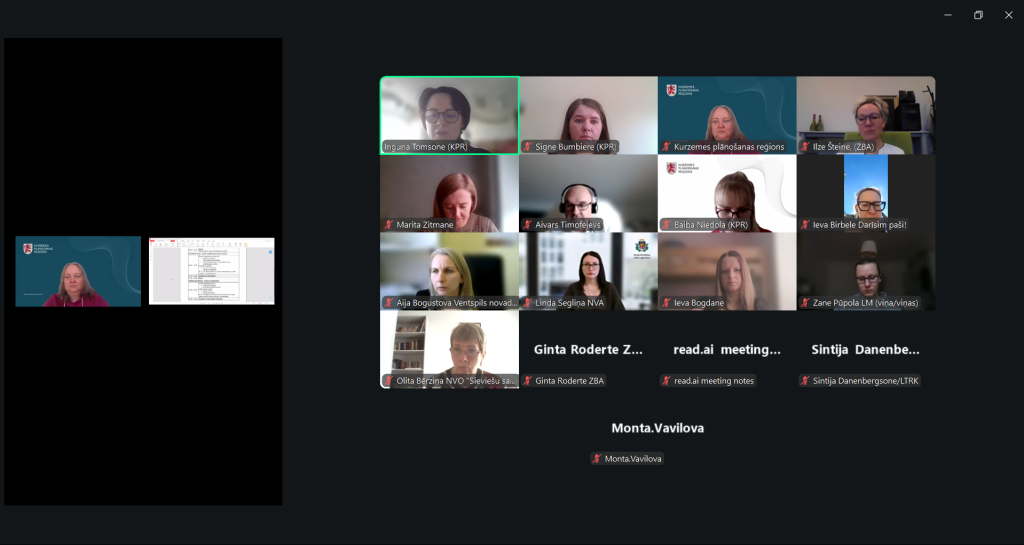
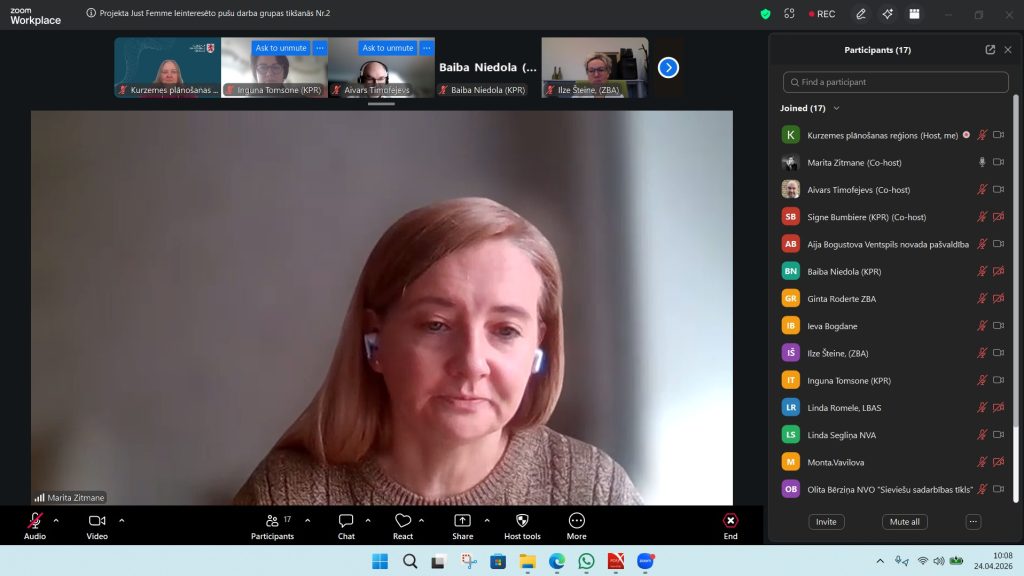
On April 24, 2026, the second stakeholders group meeting of the Interreg Europe project “Women’s Employment and Entrepreneurship in Just Transition Regions” (Just Femme) took place. The central theme of the meeting was gender-responsive budgeting and its practical application in public governance.

What is Gender-Responsive Budgeting?
Gender-responsive budgeting is an approach that analyzes how public funds are collected and allocated, as well as how these decisions impact women and men. It is not about creating a separate budget for women, but rather about improving existing budgets to make them fairer, more effective, and better aligned with the needs of society.
During the meeting, it was emphasized that budgets are often considered neutral; however, in reality, they can reinforce inequalities if gender aspects are not taken into account. A gender-sensitive approach helps identify these disparities and adjust policy decisions accordingly.
Expert Insights and Theoretical Framework
In the first part of the meeting, Associate Professor and leading researcher Marita Zitmane from the University of Latvia introduced the principles, methods, and tools of gender budgeting. Key elements discussed included:
- gender statistics and analysis,
- impact assessment,
- stakeholder engagement,
- budget monitoring and evaluation.
Special attention was given to the importance of integrating a gender perspective throughout all stages of the budgeting process—from planning to evaluation.
Practical Application and International Experience
In the second part of the meeting, practical examples and best practices were presented by researcher Aivars Timofejevs. Participants explored various approaches at the municipal level, such as:
- adapting public transport to different user needs,
- investing in childcare services,
- improving safety in public spaces,
- ensuring more balanced funding in sports and culture.
International examples from cities such as Vienna, Berlin, and Barcelona were also highlighted, showcasing successful implementation of gender-responsive budgeting.
Situation in Latvia and Key Challenges
Discussions revealed that gender-responsive budgeting is still not fully utilized in Latvia. The main challenges include:
- insufficient data and analysis,
- societal stereotypes,
- limited political will,
- insufficient institutional capacity.
At the same time, it was emphasized that promoting gender equality brings significant economic benefits, including higher employment, increased productivity, and more sustainable economic development.
Conclusion
The working group meeting confirmed that gender-responsive budgeting is an important tool for building more equitable and effective governance. Its implementation requires a systematic approach, data-driven decision-making, and close cooperation between institutions and society.
Within the JustFEMME project, such discussions and knowledge exchange are an essential step toward more inclusive and balanced regional development.
About the project
Just Femme is an Interreg Europe project involving partners from eight EU countries – Bulgaria, Greece, Poland, Lithuania, Latvia, the Netherlands and North Macedonia.
Its mission is to ensure that the Green and Digital Transitions also work for women, by promoting their active participation in entrepreneurship, employment, and regional policy-making in Just Transition territories.
Information prepared by:
Viktorija Reine
Project Manager at Kurzeme Planning Region
Phone: +371 29762971
Email: viktorija.reine@kurzemesregions.lv