

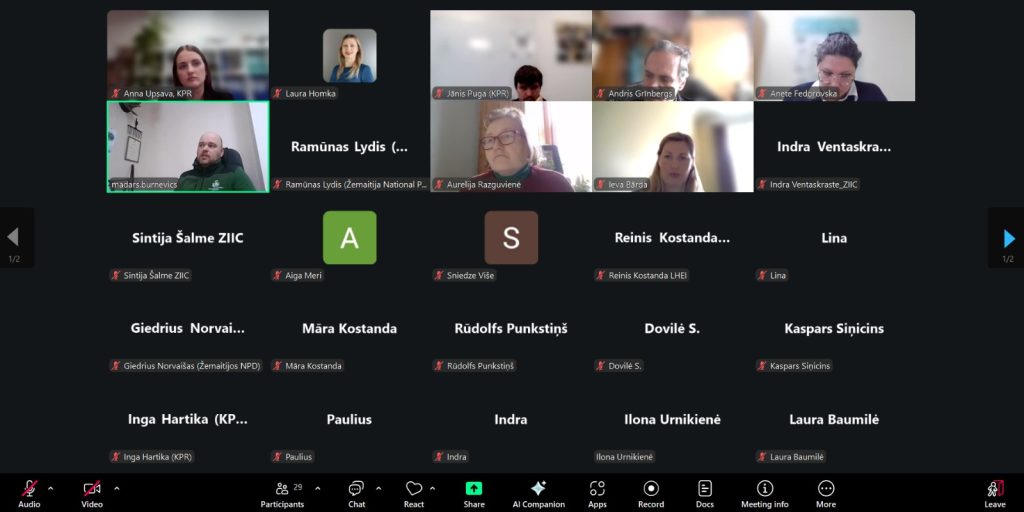
On 15 January 2026, an online seminar titled “Geosites Experience Exchange Visit to Finland: Key Findings and Transferable Practices” was held, bringing together 29 participants from Latvia and Lithuania. The seminar was organised within the framework of the “Geosites” project (LL-00244) to share experience and key insights gained during the project partners’ experience exchange visit to Finland.
The aim of the seminar was to present Finnish approaches to the identification, inventory and protection of geological heritage, and to explore the potential applicability of these solutions in the Latvian and Lithuanian context, particularly in the work of national, regional and local authorities.
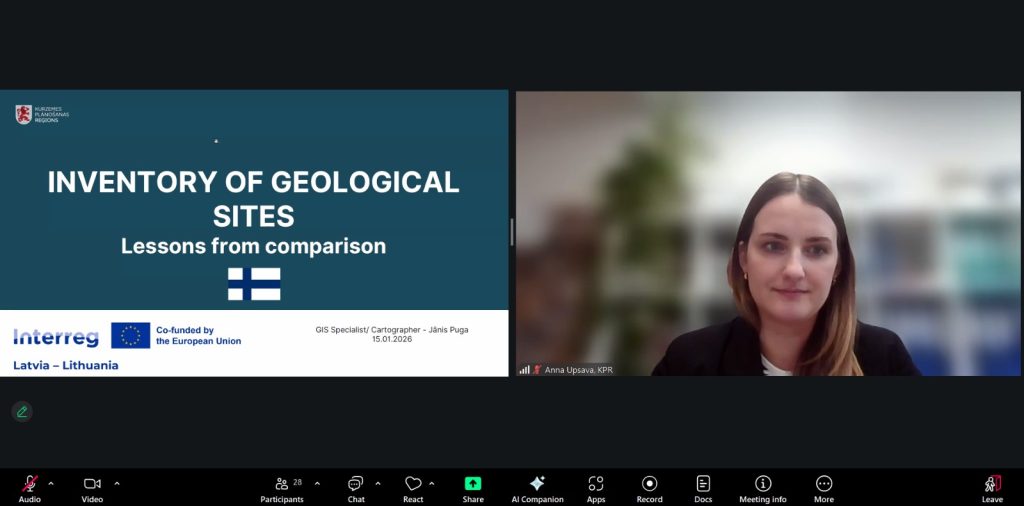
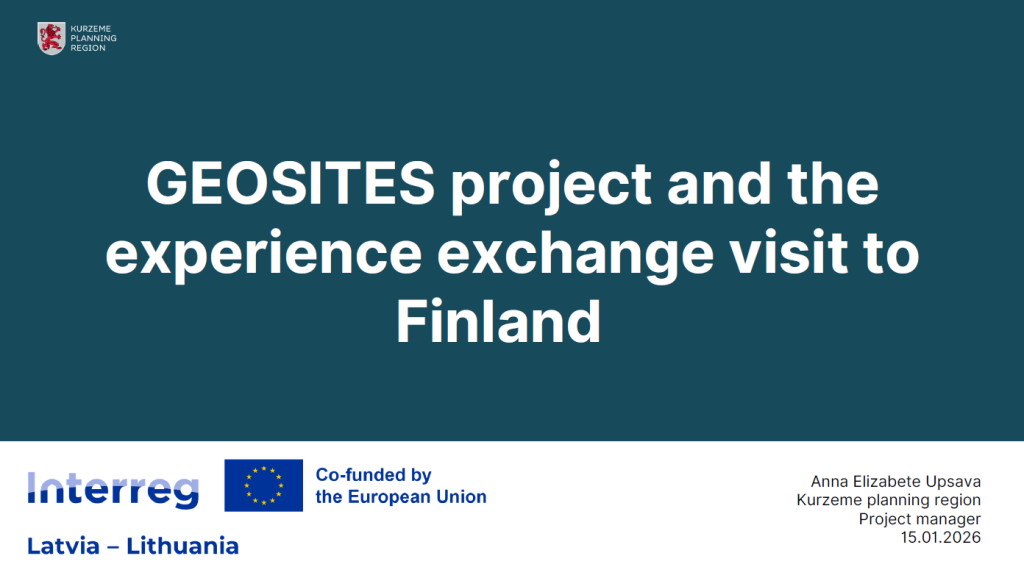
The seminar was opened by Anna Elizabete Upsava, Project Manager of the Geosites project from the Kurzeme Planning Region, who provided an overview of the project and the experience exchange visit to Finland, highlighting its main objectives and thematic focus. She emphasised the importance of a cross-sectoral approach to integrating geological heritage into spatial planning, nature conservation, environmental education and tourism.
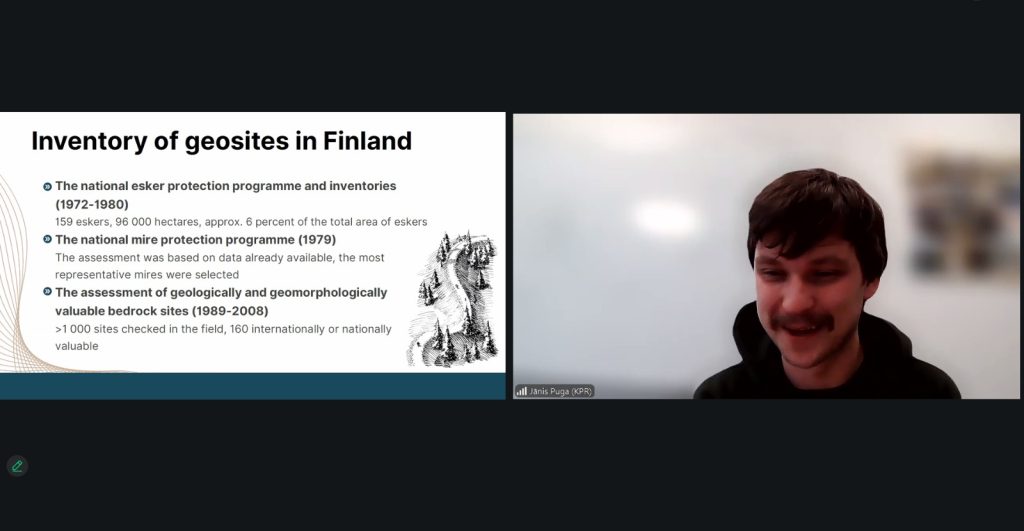
This was followed by a presentation from Jānis Puga, GIS Specialist and Cartographer at the Kurzeme Planning Region, who introduced Finland’s experience in the inventory of geological sites. His presentation focused on long-term national programmes, site selection and evaluation principles, and the role of structured data in supporting effective planning and decision-making processes.
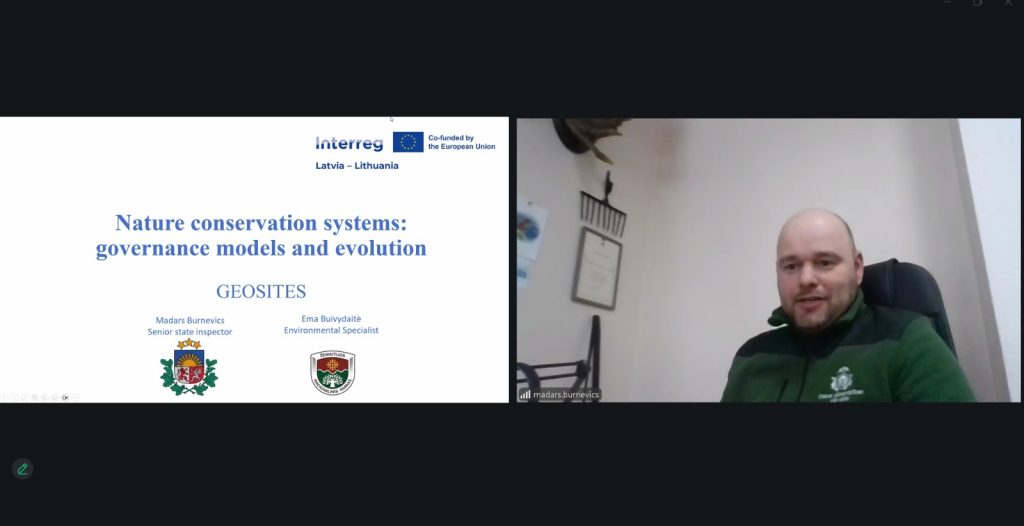
Madars Burnevics, Senior State Environmental Inspector at the Kurzeme Regional Administration of the Nature Conservation Agency of Latvia, presented an overview of nature conservation systems and their development in Finland, Latvia and Lithuania. The presentation highlighted institutional governance models, categories of protected areas and management approaches, outlining both similarities and differences across the Baltic Sea region.
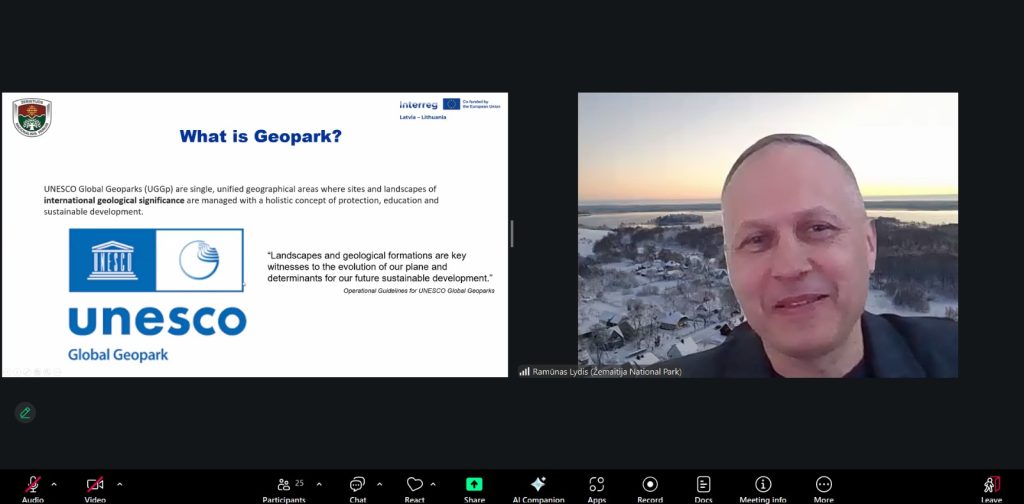
The final presentation was delivered by Ramūnas Lydis, Director of Žemaitija National Park, who introduced the concept of UNESCO Global Geoparks, explaining their core principles, criteria and potential benefits for local and regional development. Particular attention was given to the experience of the Salpausselkä UNESCO Global Geopark in Finland as an example of how geological heritage can support education, tourism and regional development.
The online seminar provided a structured overview of Finnish approaches to geological heritage management and served as an informative basis for further activities within the Geosites project, strengthening cross-border cooperation between Latvian and Lithuanian partners.
Seminar presentations:
The seminar was organised by the Kurzeme Planning Region within the project “Geosites – Promoting the Conservation of Geological Structures in Latvia and Lithuania”.
The GEOSITES project is co-financed by the Interreg Latvia–Lithuania Cross-border Cooperation Programme 2021–2027 and represents a strategic effort to strengthen cross-border collaboration in geological heritage conservation.
Information prepared by:
Anna Elizabete Upsava
Phone: +371 26369876
E-mail: anna.upsava@kurzemesregions.lv