

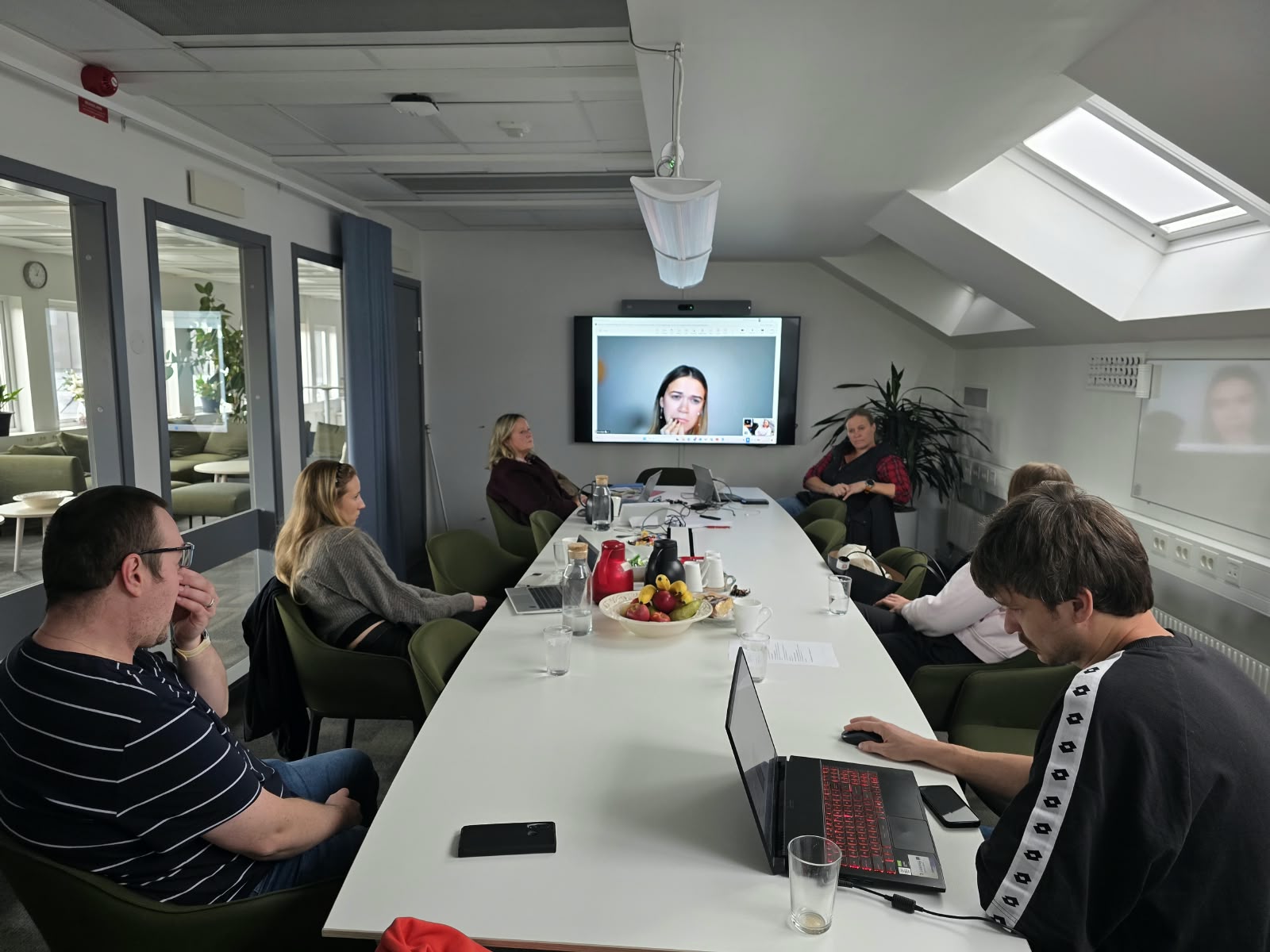
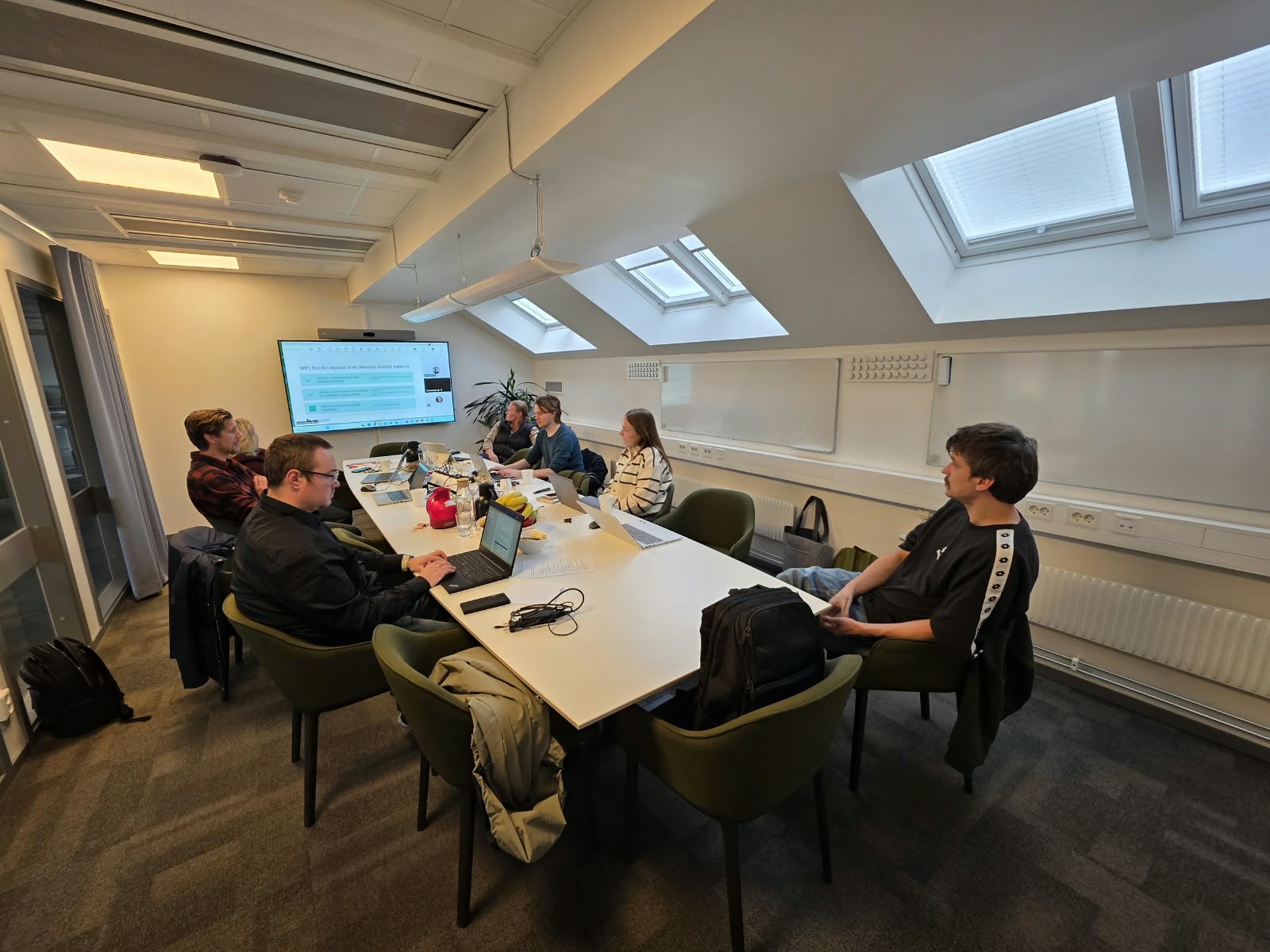
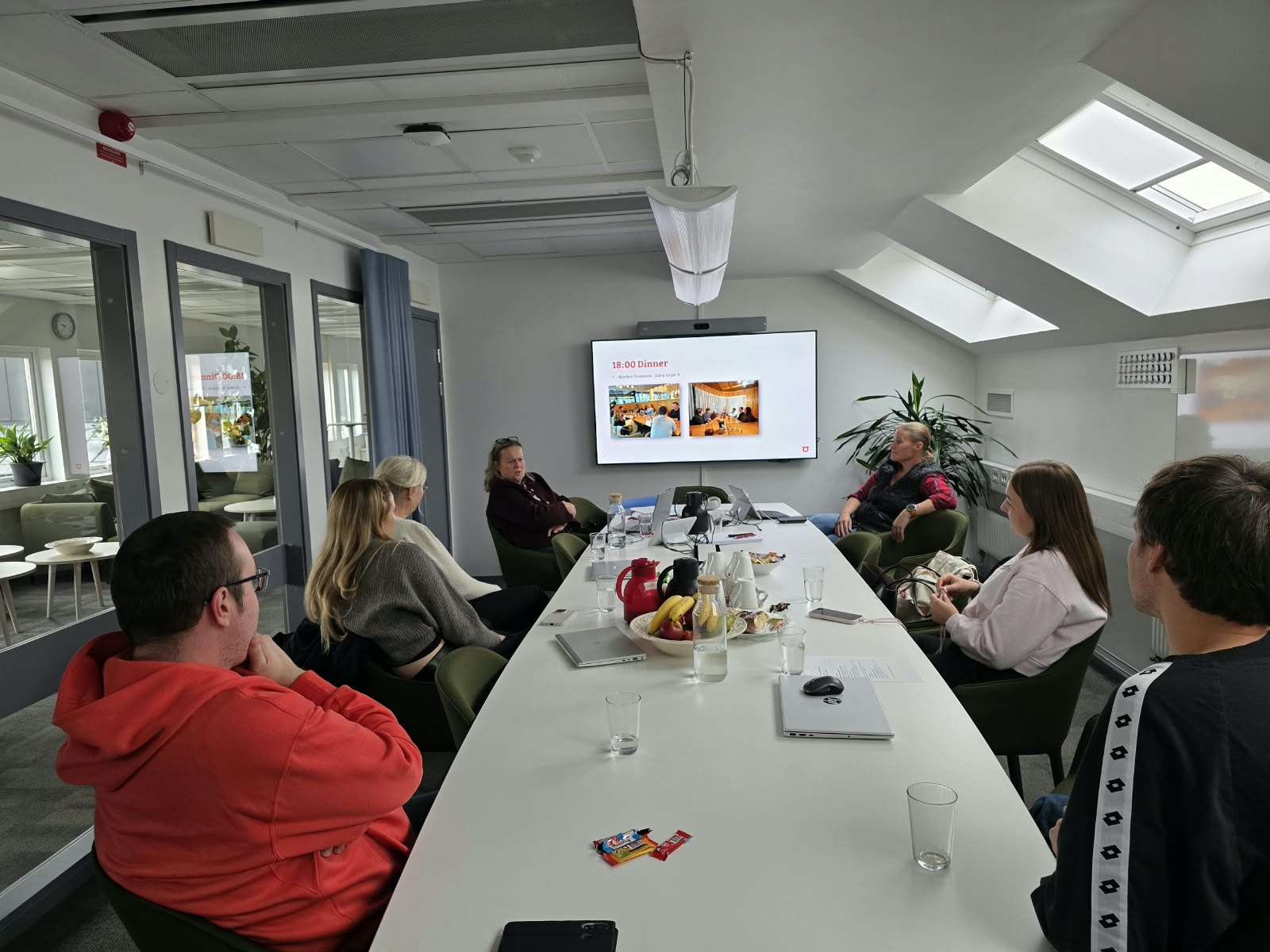
During the meeting, partners were introduced to a transport planning tool developed by Linköping University, which integrates various mobility data to help better understand residents’ mobility patterns and plan transport services. The partners also evaluated the performance of the “Freelway” digital platform used in the project and shared experiences gained in the Latvian and Swedish pilot areas.
Anna Margreta Vērdiņa, SuRuMo Project Manager at Kurzeme Planning Region, presented the good practice examples and recommendations collected within the project for introducing shared mobility solutions in rural areas.
One of the project’s most significant achievements in Kurzeme was the on-demand transport pilot activity in Alsunga and Vāne, implemented from November 2025 to April 2026. The pilot provided residents with a free-of-charge transport service that, unlike conventional public transport, operated based on advance journey bookings and was adapted to passengers’ needs. Journeys could be booked through the “Freelway” mobile application or by phone, contacting the Kurzeme Planning Region Mobility Centre, which collected booking requests and planned routes, combining several passengers into a single journey whenever possible.
The service enabled rural residents to travel more conveniently to medical appointments, shops, markets and public transport stops, where they could continue their journeys to other towns and cities. Over the five-month period, 1,413 passengers were transported, 526 journeys were completed and nearly 17,000 kilometres were travelled. The active involvement of local residents and their positive feedback demonstrated that flexible transport solutions of this kind can play an important role in improving daily mobility in rural areas.
Similar on-demand transport pilot activities were also implemented by Riga Planning Region in the areas surrounding Riga. In Lapsas, Mārupe Municipality, the service provided connections to Piņķi, Babīte, Jaunmārupe and Mārupe, while in Dzērumi, Ķekava Municipality, residents could travel to Iecava, Baldone and Ķekava.
The project experience has demonstrated that establishing a digital platform alone is not sufficient for the successful introduction of mobility services. It is essential to consider the needs and digital skills of local residents and provide practical support in using the service. Another important conclusion is that each area requires an individual approach, taking into account existing transport services and local conditions.
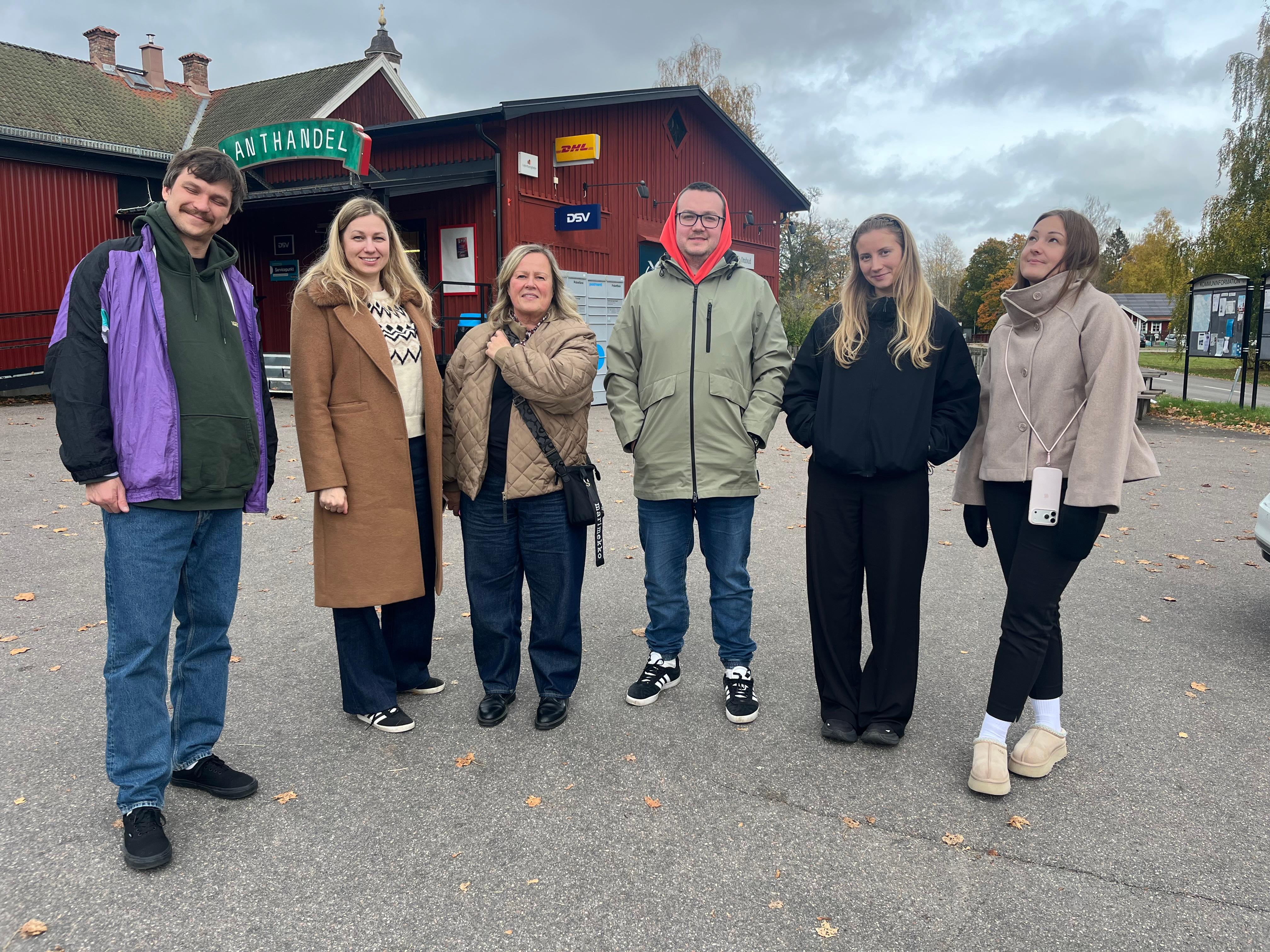
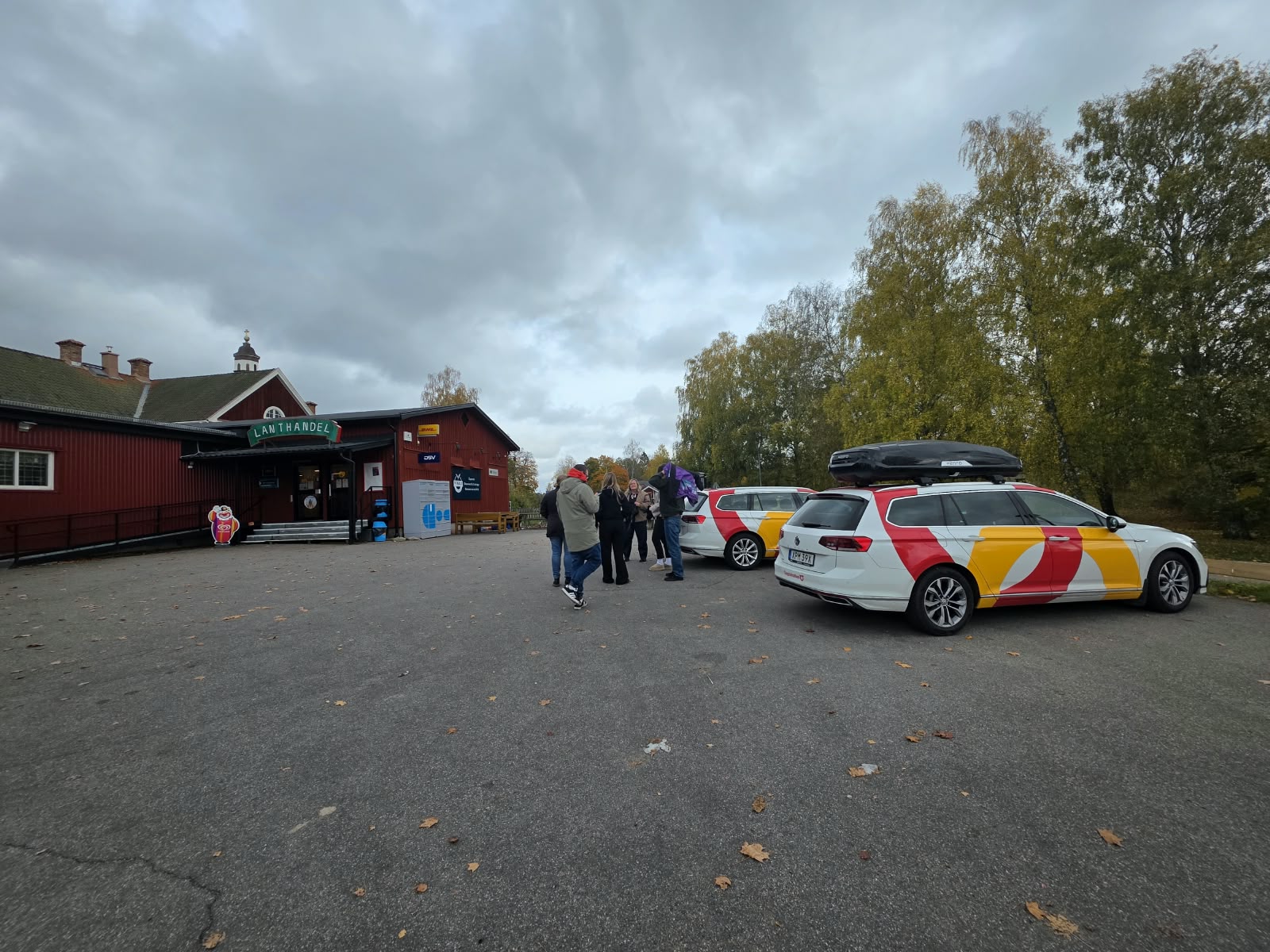
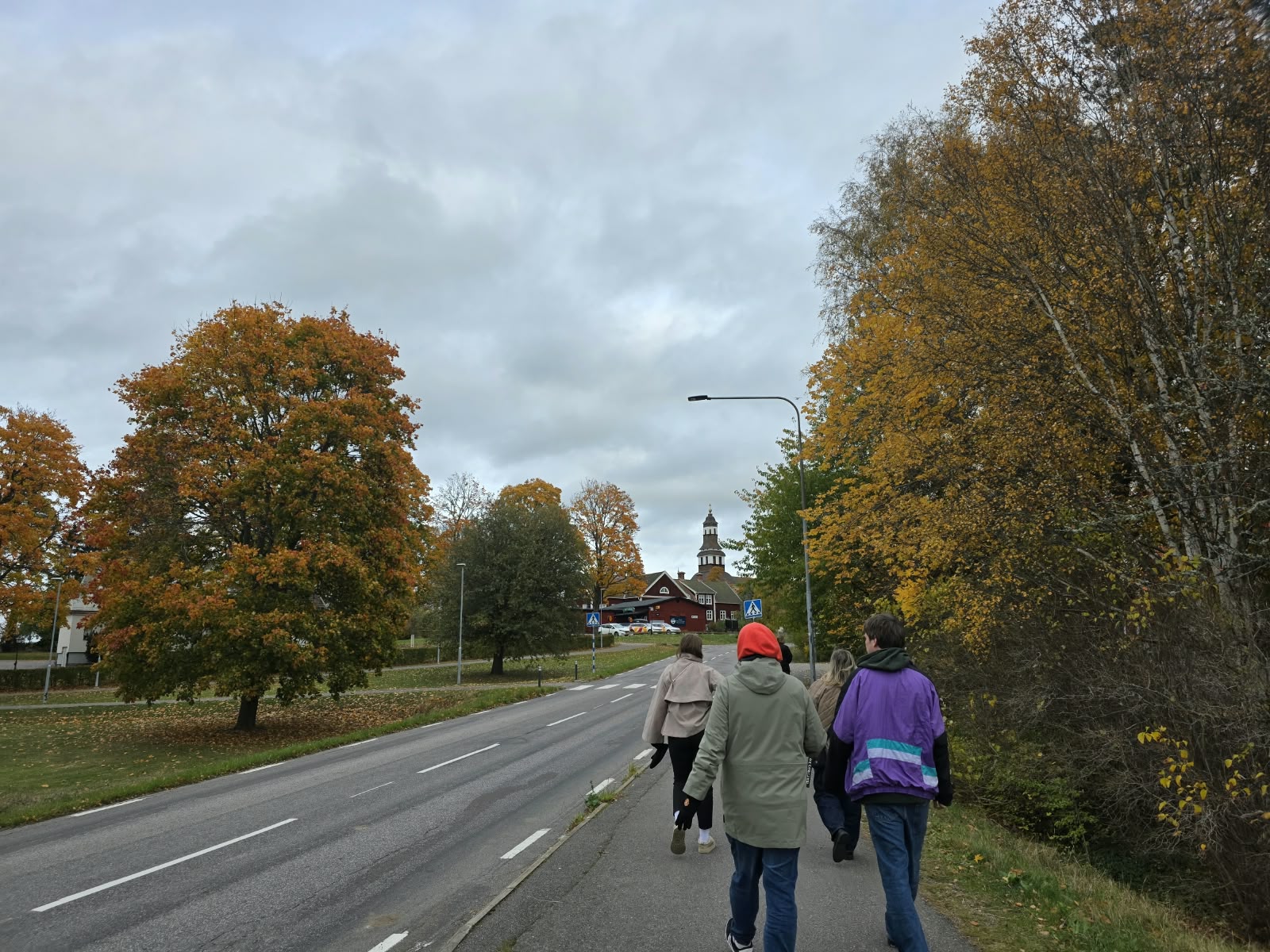
On the second day of the meeting, project partners participated in a study visit to the Swedish pilot area of Nykil, where they learned about the implementation of the local mobility solution and discussed the experience and lessons learned.
Although the “SuRuMo” project is approaching its conclusion, the experience gained and recommendations developed provide a valuable foundation for the future development of mobility services in Kurzeme and other rural areas. The results of the pilot activities will help assess opportunities to develop accessible transport solutions tailored to residents’ needs in the future.
About the project
The project “SuRuMo” (Sustainable Rural Mobility) is implemented to conduct research in pilot areas, collect and analyse data, and develop a unified digital platform, thereby finding solutions to ensure sustainable mobility in rural areas.
The project activities are carried out with the support of the Central Baltic Programme 2021–2027.
Information prepared by:
Anna Margreta Vērdiņa
Project Manager of “SuRuMo”
Kurzeme Planning Region
Tel. +371 27000178
E-mail: anna.verdina@kurzemesregions.lv
